

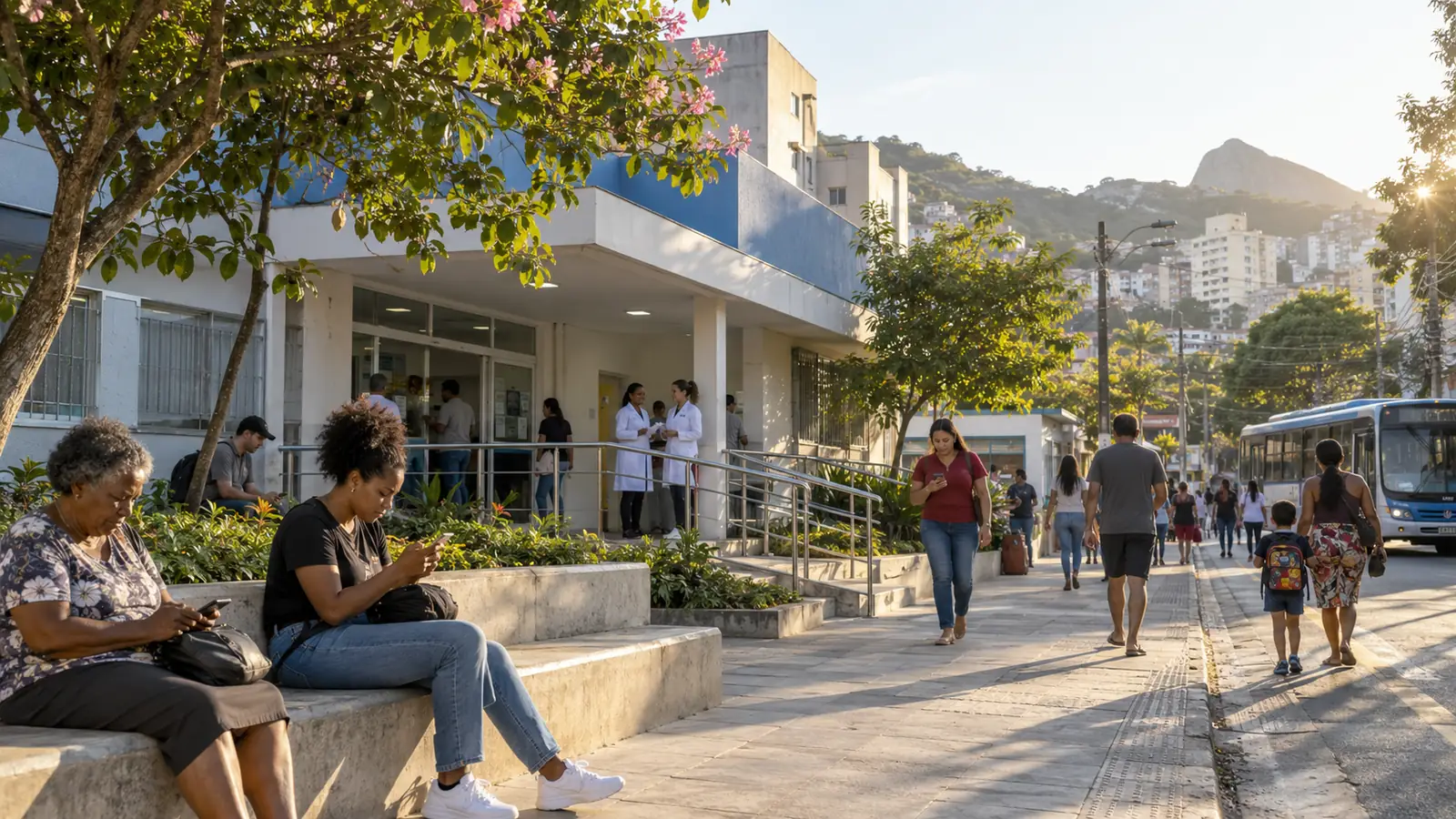
Sensors, artificial intelligence and connectivity are part of the cities of the future. But a city is only truly smart when technology improves people's lives. In health care, that means simpler access, connected data, less waste and better decisions.
For years, talking about smart cities meant picturing connected streetlights, automated traffic signals, cameras, sensors and monitoring centers. These tools still matter. But the conversation has matured. Today, one question carries more weight than a count of devices: is technology improving the lives of the people who live in the city?
In Brazil, the Brazilian Charter for Smart Cities follows this same logic. It is not a binding regulation: it is the Federal Government's reference agenda, developed under the ANDUS Project, with 8 strategic objectives and more than 160 recommendations. It ties the idea of a smart city to sustainable digital transformation, inclusion, data governance with transparency, security and privacy, and the use of technology to solve concrete problems and reduce inequality.
Internationally, World Cities Day on October 31, 2025, observed globally in Bogotá, took exactly this approach: people-centered smart cities.
And few areas make this discussion as concrete as health care.
Health care is also urban infrastructure
The world is more urban than previously assumed. The 2025 revision of the World Urbanization Prospects began measuring urbanization with a harmonized spatial criterion and found that 45% of the world's population lives in cities and another 36% in towns. Two-thirds of all projected population growth through 2050 will take place in cities.
The larger and more complex a city becomes, the harder it is to offer accessible health services that keep pace with its population. And urban health outcomes do not depend only on having hospitals and clinics: mobility, inequality, the environment, urban planning, information and management capacity all directly affect what happens to people.
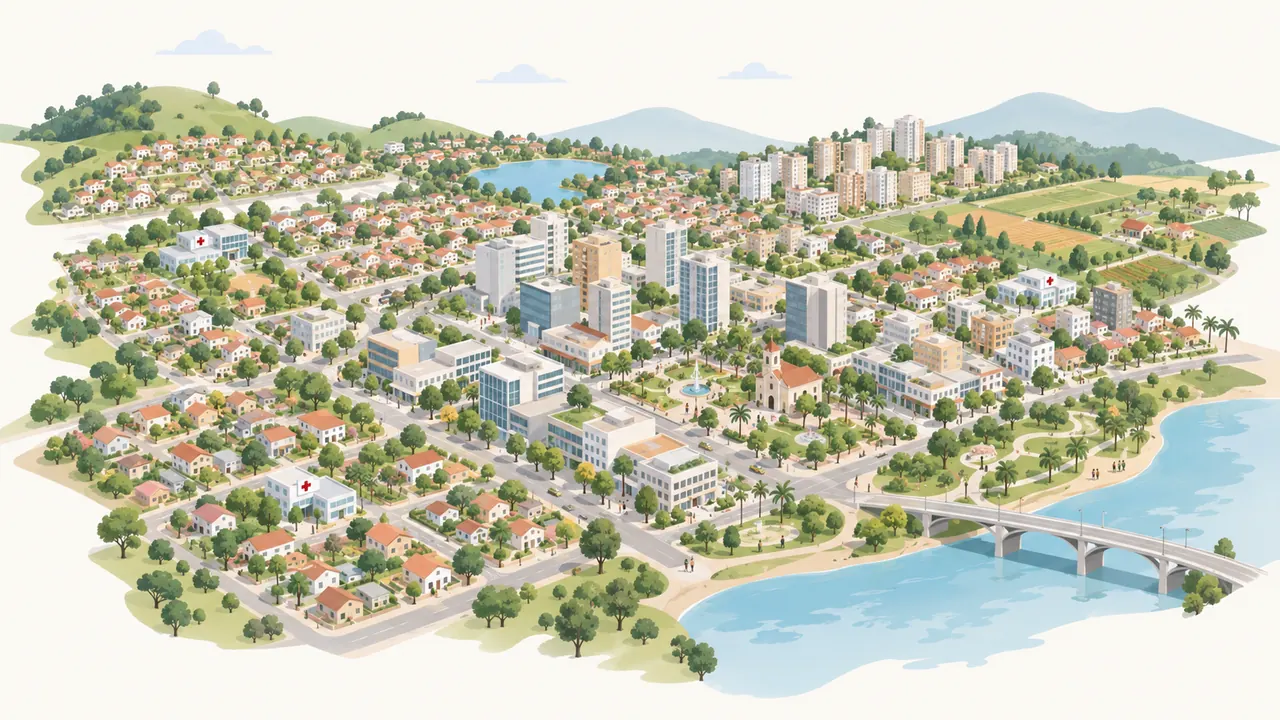
That is why a city can expand its physical infrastructure and still be not very smart in the way it serves people.
A medical appointment slot may exist and go unused. One patient may wait for an exam while another misses an appointment because they forgot the date. A Health Department may hold thousands of records and be unable to turn them into decisions at the right moment. A citizen may live close to a UBS (basic health unit) and still have to leave home in the middle of the night just to try to get an appointment.
Often, the problem is not a lack of resources. It is a lack of flow: of information, communication, data and access.
Smart cities need to be smart for whom?
The idea behind people-centered cities is simple: urban technology should be judged by the impact it has on citizens - accessibility, inclusion, sustainability, safety, rights and quality of life. This changes the logic of digital transformation. Instead of asking "what technology can we install?", the question becomes "which problem of the people can we solve better?".
In municipal health care, the difference is enormous. Consider something that seems simple: booking an appointment. If digital access depends on downloading an app, creating an account, remembering a password and learning a new interface, the technology solves the problem for one part of the population and creates another for those who are less comfortable with digital tools.
Our strategy is different. Celina operates through WhatsApp, a channel that is already part of the daily routine of a large share of the population, so that citizens can request appointments and exams, receive reminders, confirm, cancel or reschedule visits, and follow their requests. There is no need to install another app. The idea is to make the service adapt to the citizen's life - not to force the citizen to adapt to the service.
Intelligence also means not wasting what the city already has
Imagine a schedule with 100 appointments booked. The professionals have already been assigned. The facility is available. The public resources for that care are already committed. If some patients do not show up and do not warn anyone, the city loses capacity it already had - and another person is waiting for that same appointment.
This is one of the clearest examples of how information and management increase efficiency without expanding physical infrastructure.
In a municipality in the semi-arid region of Paraíba, with about 5,000 inhabitants and a population almost entirely dependent on the SUS (Brazil's Unified Health System), we ran an operation in which the no-show rate recorded before implementation was 30%. The average between January and October 2025 was 12.44%; the August 2026 measurement reached 9%. These are operational data from our platform, auditable on the municipality's own dashboard - not a national average and not a contractual promise: larger municipalities, with more complex networks, follow a different curve.
What we set up there was automatic reminders, the ability to confirm and cancel through WhatsApp, and monitoring of indicators on a management dashboard. When a patient says they will not attend, a slot that would have vanished from the schedule becomes an opportunity to see someone else. It is a small change in the process. At municipal scale, small changes add up. It is the same mechanism we described in the full case study of this operation.
The calculation almost no municipality makes
There is a cost that shows up across several budget lines and, for that reason, rarely shows up in full: the cost of getting the patient to care.
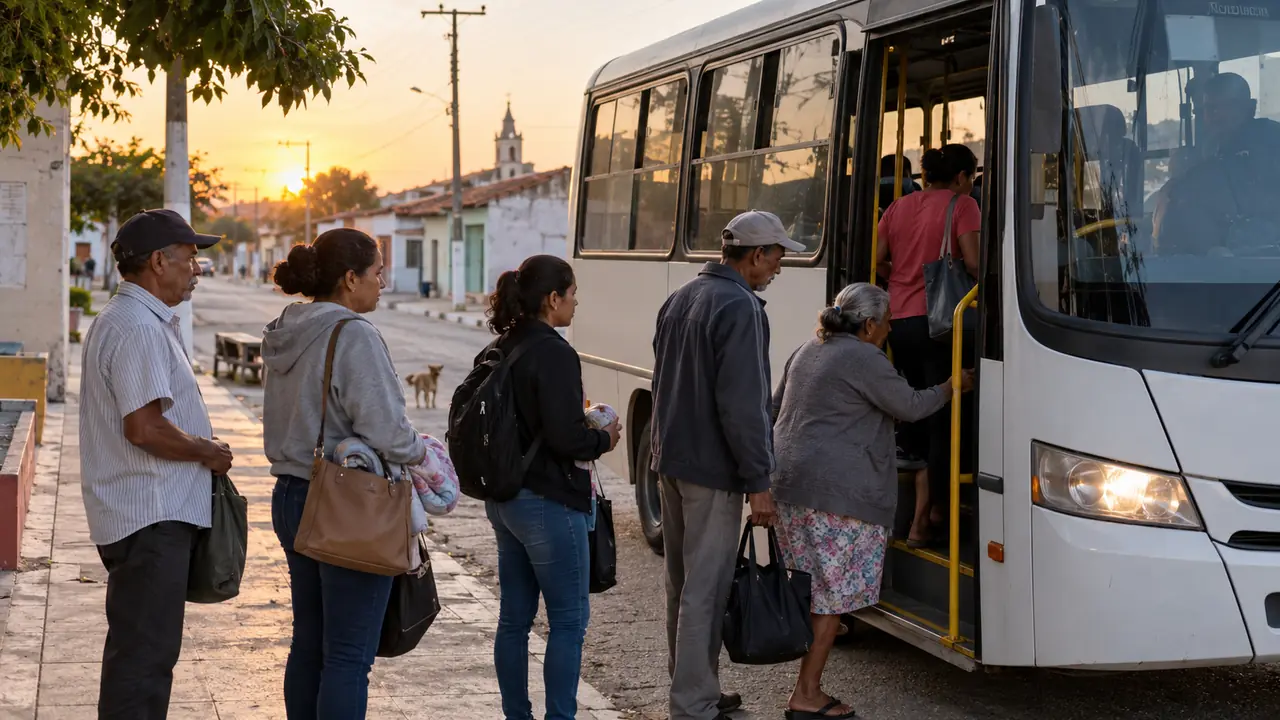
Treatment Away from Home (TFD) - established by Ordinance SAS/MS No. 55/1999, now incorporated into the Ministry of Health's consolidation ordinances, and operated under a state manual agreed in the CIB (the state-level tripartite committee) - covers travel and a living allowance when the care does not exist in the patient's home municipality. In municipal practice, the total cost is scattered: tickets, fuel, vehicle maintenance, drivers, per diems, allowances for the patient and the companion, and occasional lodging. Part of it sits in Health, part in Transportation, part in Administration. The result: almost no one can say how much it cost last year to send patients in a single specialty out of town.
The logistical cost of access is not an administrative detail: Law No. 15,233 of October 7, 2025, which created the Agora Tem Especialistas Program, expressly recognizes transportation, lodging and meals for patients undergoing radiotherapy and hemodialysis away from home as a matter of federal law.
When this calculation is closed by specialty, a tipping point appears. There are specialties where the annual cost of travel exceeds the cost of bringing the service into the municipality - through contracted services, task forces, telehealth, Integrated Care Offers under the Mais Acesso a Especialistas Program, or an intermunicipal consortium. And there are specialties where it does not, and travel remains the right decision.
This is arithmetic, not prediction. Our TFD module structures the recording of this calculation - destination, specialty, recurrence, companion, cost entered - and gives the manager a ranking of specialties by logistical cost and by volume, along with the no-show rate in TFD, which is where waste hurts most: the trip happens and the care does not.
The calculation depends on the municipality having, or starting to have, structured TFD records; part of the cost is usually outside the Health budget and requires a data-collection agreement with Transportation or Administration; and minimum scale matters, because not every specialty is viable locally. We organize the evidence - we do not carry out feasibility studies or set prices for specialized services. The manager decides; our role is to make sure they decide with the full number in hand.
The territory speaks before the report does
A city does not fall ill uniformly. Demand is concentrated, recurs and has an address.
Our platform aggregates demand, no-shows and recurrence by facility, micro-area and period. Cross-referenced with public databases - SINISA, which replaced SNIS as the national basic sanitation information system; IBGE census tracts; and DataSUS hospitalization and production data - this reading shows where the territory that receives the least infrastructure is also the one that consumes the most care for causes that primary care could have prevented. The Brazilian List of Ambulatory Care-Sensitive Conditions (Ordinance SAS/MS No. 221/2008) is the established instrument for this analysis.
For the manager, this is a priority map: where to invest in sanitation, drainage, staff or active outreach, and how to technically justify a budget amendment or a project.
This is ecological analysis. It shows overlap between areas, not causation between a public works project and an individual's outcome - and it cannot be transferred from the territory to the individual. It depends on addresses and micro-areas being recorded with quality. We would rather deliver a well-built hypothesis than sell a certainty the methodology cannot support.
A data-driven city sees the problem sooner
In the traditional model, many indicators reach the manager after the problem has already happened. The appointment has already been missed. The queue has already grown. The schedule has already closed. The patient has already complained. The team is already overloaded.
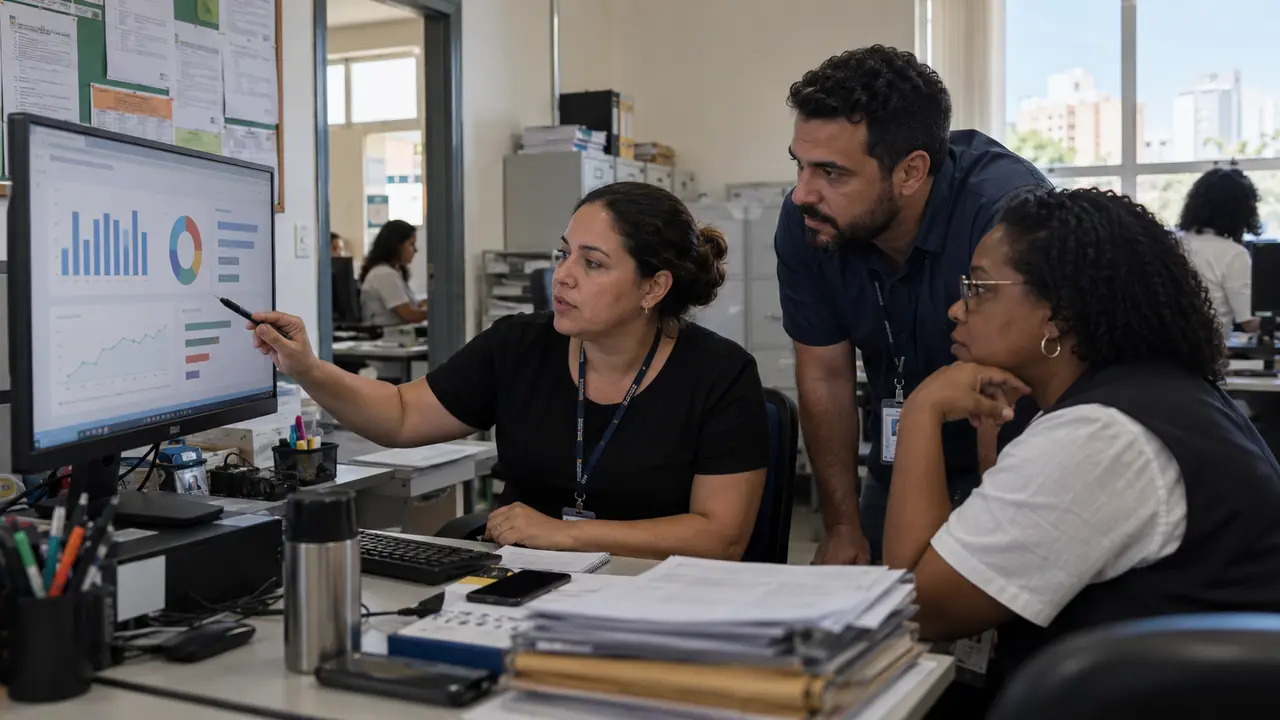
On the DHF platform, municipal managers track occupancy rate, no-shows, output by team, slot utilization, citizen satisfaction and other indicators, by facility, period or professional. The question is no longer just "how many people did we see this month?" It now includes: where are we losing capacity? which facility behaves differently from the others? where has the no-show rate increased? how is the population rating the service? which data call for action now?
A smart city is not one that produces more data. It is one that turns data into decisions.
Brazil put urban digital transformation on the agenda - and it moved forward in 2026
On June 11, 2026, the Ministry of Cities launched the Rede de Cidades + Inteligentes (Smarter Cities Network), which supports 22 municipalities across the country's five regions, selected through Public Selection Notice SNDUM No. 01/2026, in developing diagnostics, action plans and local urban digital transformation strategies, with the support of an Academic Support Network coordinated in partnership with UFRGS. It is no longer an open call for proposals: it is policy in execution - and it will generate municipal plans that will need sector-specific content, including health.
In health care, the country has also entered a new stage. On August 11, 2026, the Ministry of Health, in partnership with Serpro, began the Journey to the SUS Sovereign Cloud. The first front covers the National Registry of SUS Users (CadSUS) and the RNDS (National Health Data Network). The RNDS holds more than 5 billion health records; CadSUS includes 228.6 million active users with a CPF (taxpayer ID), plus 4.8 million without one. DataSUS estimates that about 459 digital systems and solutions are in its custody, to be migrated, modernized, replaced or discontinued over the course of the journey.
Funding has also changed its calendar. Ordinance GM/MS No. 10,994 of May 13, 2026, amended Ordinance GM/MS No. 3,493/2024, extended the transition period for federal co-financing of primary health care, and set the partial implementation of the quality component to begin in the second four-month period of 2026. For the municipality, this means indicators are no longer a matter of future planning; they are a matter of present funding transfers.
The direction of all this is the same: the future is not just digitizing information. It is making that information flow in a way that is secure, standardized and useful.
Interoperability is a technical word for a problem every citizen knows
For people who work in health technology, the term is interoperability. For citizens, the problem is simpler: "why do I have to provide everything again if the system should already know?".
Systems that do not talk to each other create rework for professionals, fragment information and make continuity of care harder. That is why integration standards and structures such as the RNDS have become strategic. We work in this ecosystem with integration with the RNDS and e-SUS APS and with tools built for municipal management. A smart city cannot be made up of dozens of digital islands: it needs connected ecosystems. The same principle appears in the World Health Organization's digital health guidelines, which highlight interoperability and standardization as components of systems capable of supporting care and public policy consistently.
Artificial intelligence enters a second stage
When systems begin to produce and connect more information, a new problem arises: how do we find what really matters among so much data?
The 12th edition of the TIC Saúde survey, with 2025 data released on May 12, 2026, showed that 18% of Brazilian health facilities were already using artificial intelligence - 25% in the private sector and only 11% in the public sector. Use reaches 31% in facilities with more than 50 beds and 29% in Diagnostic and Therapeutic Support Services. Among those already using it, 76% use generative models, and the main application is organizing clinical and administrative processes. The gap between public and private is more than twofold - and it will not close with speeches.
But putting AI into a system does not automatically make it smart. Technology only creates value when it reduces complexity or improves a decision. Celina Mind, integrated into our ecosystem, starts from that premise: allowing information in the system to be accessed through direct interaction, reducing manual searches and helping professionals and managers find answers within the available data.
It is a natural evolution. First, we digitized. Then, we connected. Next, we structured indicators. Now, we are starting to talk to the data.
Compliance and sovereignty: the question every manager should ask
If the Journey to the SUS Sovereign Cloud says anything to the market, it is that the question "where is the data?" has stopped being technical and become public policy. A responsible manager should ask it of any vendor - including us.
Our position is clearly bounded. We are a service and management layer, not a national repository: the citizen's official record stays in the SUS systems, and those are the systems we integrate with - RNDS and e-SUS APS. We operate under the General Data Protection Law (LGPD). And data minimization and de-identification of personal data before any processing by language models is the architectural commitment we have made, following the evolution of the national health infrastructure as the Journey advances.
We would rather be questioned about this than praised for leaving it out.
Companies, clinics, governments and citizens are part of the same city
Another misconception is to imagine that a smart city is built by the public sector alone. The city is an ecosystem: hospitals, clinics, laboratories, companies, universities, managers, professionals and citizens generate demand and information and use the same urban infrastructure.
That is why the digitization of health care also needs to happen outside the Municipal Health Departments. For clinics and private organizations, we bring together electronic health records, digital prescriptions, referrals, schedule management, occupancy and output indicators, care evaluation, dashboards and artificial intelligence tools. The context changes; the principle does not: use data and technology to reduce waste and improve care.
The citizen is no longer just a user
There is another component of smart cities: participation. After receiving care, citizens rate the service through the same digital channel. For the manager, this turns subjective perception into an indicator that can be tracked over time. In the operation we ran in the semi-arid region of Paraíba, 86% of citizens rated their experience positively, in a survey of 420 users.
Ratings do not replace audits, clinical indicators or technical analysis. But they add what no production spreadsheet shows on its own: how citizens perceive the service they received. When this information returns to management, a cycle forms - care, experience, data, analysis, improvement. This cycle is a hallmark of mature digital public services.
Inclusive before sophisticated
Technology can also increase inequality, and UN-Habitat warns that digital transformation without inclusion deepens existing divides. This logic applies especially to health care. Older adults, people with less schooling, low-income families, rural residents, citizens with limited connectivity and people with little technological familiarity are all part of the city.
That is why offering only one sophisticated channel is not enough. In our model, digital service through WhatsApp works as an additional layer of access, while traditional channels continue to serve those who depend on them. Digital transformation should not mean closing the analog door. It should mean opening new doors.
And where do the Sustainable Development Goals come in?
The link between digital health and smart cities appears in the 2030 Agenda. It starts with SDG 3 - Good Health and Well-Being: improving access, supporting continuity of care and making better use of available care capacity. But it does not end there.
- SDG 9 - Industry, Innovation and Infrastructure: digital infrastructure, interoperability and information systems as part of more modern and resilient public services.
- SDG 10 - Reduced Inequalities: when a service no longer requires travel for a simple request, it lowers barriers that mainly affect people with less time, income or mobility.
- SDG 11 - Sustainable Cities and Communities: sustainable cities need to make better use of the resources they already have, and health care is part of that equation.
- SDG 16 - Peace, Justice and Strong Institutions: indicators, auditable data and feedback from the population strengthen institutions.
- SDG 17 - Partnerships for the Goals: governments, companies, universities and health organizations need to build this infrastructure together.
No software on its own achieves any of these goals. But technology can turn broad targets into processes, indicators and measurable results.
How a municipality gets started - and how it pays for itself
The most common objection is not about the solution. It is about the contracting instrument and the funding source.
On the funding side, departments usually assess primary health care operating funds, own resources and parliamentary amendments. On the contracting side, Law No. 14,133/2021 applies, in its various modalities, along with the Startups Legal Framework (Complementary Law No. 182/2021), which created the Public Contract for Innovative Solutions. The choice of path always rests with the municipality's legal and internal control teams - our role is to provide the technical documentation that supports the decision, not to suggest shortcuts.
We are qualified under InovaSUS Digital, in Notice No. 01/2026 of SEIDIGI/Ministry of Health - a nationally competitive process, with 657 submissions and 383 approvals.
What does a truly smart city deliver?
Perhaps the best test is not in an operations center. Perhaps it is in everyday routine.
A person no longer wakes up at 3 a.m. to try to get a slot. A patient receives a reminder and does not miss the appointment. Another realizes they cannot attend and cancels from their phone. The slot returns to the system. Another citizen is seen. The Department identifies that a particular facility has more no-shows and investigates. The manager follows the population's satisfaction. The data guide the next decision. And, once a year, someone finally answers how much it cost to send patients of one specialty out of town - and decides with that number in hand.
None of this sounds like science fiction. And that is precisely the point. Urban technology matures when it stops drawing attention to itself and simply makes the service work better.
In 2026, this discussion stopped being theoretical. The Ministry of Cities supports municipal digital transformation strategies. Brazilian health care is building its national data infrastructure. Artificial intelligence is entering health facilities, still unevenly. And the UN system reinforces that the center of a smart city must remain the person.
For us, it is exactly at this meeting point of citizen, health and data that transformation begins. We do not aim to be the platform for the whole city. We play a more specific - and more defensible - role: we are the health layer of the smart city. Because the city of the future will not be measured by how much technology it has. It will be measured by its ability to use that technology to better care for the people who live in it.
Want to know what these numbers would say about your municipality?
Before any commercial proposal, we produce a free diagnostic reading of your municipality based on public data - with no access to your internal systems and at no cost. If the number makes sense, we talk. If it does not, you keep the diagnostic. Talk to the DHF team.
Integrity note: the regulatory, statistical and institutional data cited in this article were verified against primary sources on September 8, 2026. Health and urban development regulations and programs change frequently; we recommend reconfirming that they are still in force before using any reference in this text as a basis for decisions. The operational results cited come from our own platform, refer to a specific municipality and are available for audit - they are not a national average or a performance projection for other municipalities.